
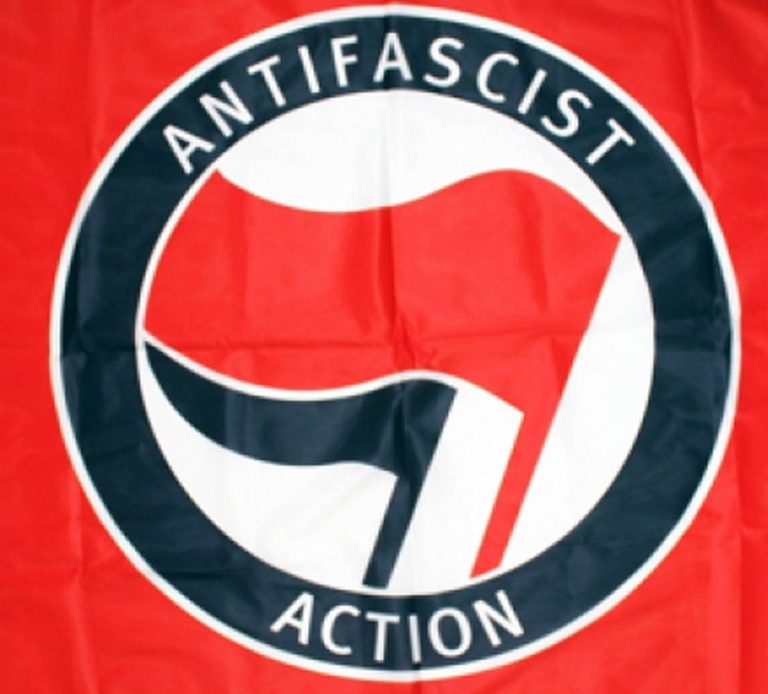
ANTIFA
We are all Antifa! Well... We should be, anyway.
Despite statements from some individuals, I think it's important to reiterate – Antifa is not a single centralised organisation. If anything, it's more of a movement. Antifa stands for anti-fascist and honestly, in the current political climate we should all be anti-fascist – no matter our religion, political inclination, or location.
The Antifa movement can be traced back to European resistance groups in the twentieth century. The original Antifaschistische Aktion (Antifascist Action) was formed in 1932 by the Communist Party of Germany, to oppose Adolf Hitler's Nazi Party and other far-right groups. Members of this group organised demonstrations and distributed information, and there were some instances where fights broke out with Nazi groups like the SA. It was this group, logo, and ethos, that inspired todays Antifa imagery.
During WWII European Resistance Movements often made up of Communists, anarchists, and other leftists, fought Nazi and fascist occupation forces – In Countries like France, Yugoslavia, and Greece, resistance movements engaged in guerilla warfare, and underground publishing.
Hey, maybe this is why they're scared.
There is no National or Worldwide leadership, membership, or formal hierarchy for Antifa. Instead, groups tend to be decentrilised networks that come together around shared opposition to far-right ideologies.
Okay, so you've gathered by now I'm sure, that I stand with Antifa. But let's put that aside for a moment and take an honest, balanced look at what it means, and what's happening now.
Antifa opposes fascism, white supremacy, racism, and far-right extremism. That may be why they view those of us who nurture these beliefs and opinions the way they do. Antifa are a direct threat to those in power or influential positions.
Antifa support direct action, and often protest and counter-protest, and distribute information. Protesters often organise rallies, and educate communities about extremist groups and the consequences of fascism. There are broader beliefs that many also oppose. Authoritarianism, nationalism and capitalism, to name a few.
Some critics point out that Antifa's willingness to use confrontational tactics, such as counter-protesting, sets it apart from other activist movements, and can inflame delicate situations. They say that the approach undermines peaceful protest, fuels polarisation, and can cross into lawlessness.
In direct opposition to those views, supporters see Antifa as a necessary grassroots defense against the rise of fascism and hate groups.
So just to reiterate – It is not an organisation, has no headquarters, leaders or universal agenda. The focus is anti-fascism, particularly white nationalism. Tactics can vary, between peaceful and confrontational, and these depend greatly on the group or individuals involved.
Donald Trump has clearly stated that he is designating Antifa as a ‘major terrorist organisation' and has called for investigations into people or entities ‘funding Antifa'. There is also now a proposed resolution in Congress (H.Res. 26) to designate Antifa as a domestic terrorist organisation.
The problem is experts, legal scholars, and analysts are already flagging a myriad of challenges and problems with doing this. The U.S. law does not currently provide a mechanism for designating domestic terrorist groups as ‘terrorist organisations' in the same way that it does for foreign groups. There are major concerns regarding the Constitution of the United States, particularly the first amendment. Freedom of speech, association and protest are at risk if people are punished not for criminal conduct – but for being associated with a broadly defined ideology. Applying a terrorism label could, and will, sweep in people that have little-to-no involvement with any illegal or violent acts.
This renewed hate campaign and criminalisation of people on the left is only going to inflate tensions and broaden the already huge gap between the American public. This is such a shame, because the whole point of this movement is to identify a risk to us as citizens, and push back at fascism which threatens us all, and our rights as human beings. It raises the risk of public discourse and means that what once was a protest, becomes framed as a National Security Risk.
Any time a government seeks to label a domestic movement as terrorist, there becomes a danger of misuse (learn from the U.K.) both accidental and deliberate.
In conclusion, Antifa has it's roots in 20h Century anti-fascist resistance movements, but today it exists as a loose network rather than a formal organisation. While some individuals identifying with Antifa have engaged in confrontational tactics, the movement overall is diverse and has no formal structure. Branding Antifa as a terrorist organisation is controversial because of legal, constitutional, and practical challenges, particularly in defining what Antifa actually is. Supporters see it as a response to far-right extremism, while critics say it is dangerous. Ultimately, the debate reflects much deeper tensions in society over protest, political violence, and the balance between security and civil liberties.
We must act against fascism. It's not just about politics. Opposing fascism is a moral imperative – it means standing against hate, cruelty, and authoritarian domination. Antifa believe in compassion, justice, and a shared humanity. It's about ensuring that the darkest chapters of history are not repeated, that societies remain free and just, and that future generations inherit a world where human dignity is protected.
So like, who would want to be pro-fascist, right?